


Samsung has significantly upgraded the camera system on the Samsung Galaxy S26 series, focusing primarily on artificial intelligence and software enhancements. Notably, the new lineup introduces a horizon-lock feature for the first time. 📷
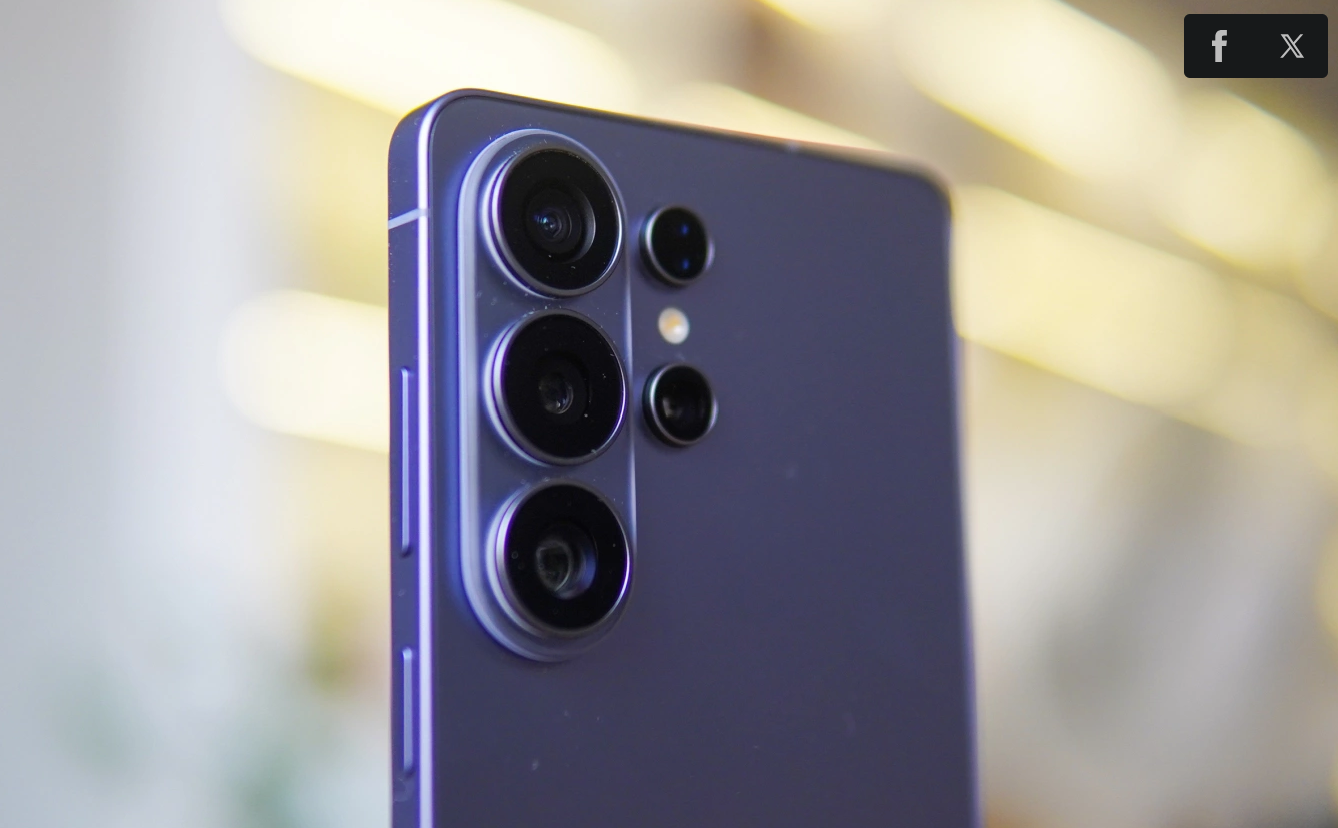
Compared with the Samsung Galaxy S25 generation, Samsung has made relatively few major hardware upgrades to the cameras. The standard Samsung Galaxy S26 and Samsung Galaxy S26 Plus largely retain the same camera configuration as their predecessors, including a 50-megapixel main camera, a 12-megapixel ultra-wide lens, and a 10-megapixel telephoto lens. Meanwhile, the Samsung Galaxy S26 Ultra continues to feature a 200-megapixel main sensor, alongside 50-megapixel ultra-wide and periscope telephoto cameras, plus an additional 10-megapixel telephoto lens.
This year, however, Samsung is placing strong emphasis on AI-driven image processing through its Galaxy AI platform. Enhancements include improved photo editing, stronger HDR processing, and upgraded Nightography capabilities, as well as refinements that allow the sensors to capture more light—resulting in clearer photos and videos. According to Amateur Photographer, the Samsung Galaxy S26 series could become the “new king of night photography,” particularly the Samsung Galaxy S26 Ultra.
ProScaler Technology
Despite seeing few changes in camera specifications compared with the Samsung Galaxy S25 lineup, the new trio of smartphones is equipped with ProScaler. Developed by Samsung, this AI-powered image upscaling technology enhances zoom performance, allowing photos and videos to appear sharper through advanced algorithms while smoothing fine textures.
According to the manufacturer, ProScaler works in tandem with mobile Digital Natural Image engine (mDNIe) to process images with up to four times greater accuracy than the previous generation. This improvement helps deliver more natural and lifelike colors in both photos and videos.
Combined with the hardware power of the Qualcomm Snapdragon 8 Elite Gen 5 chip and a dedicated image signal processor (ISP), the system can perform these tasks faster while maintaining higher processing precision.
Nightography Low-Light Photography
Nightography—often described by Samsung as a “night vision” camera capability—was first introduced in 2022. On the Samsung Galaxy S26 generation, this low-light imaging technology combines large-aperture camera hardware with AI-driven image processing to improve the quality of nighttime photos and videos.
For example, on the Samsung Galaxy S26 Ultra, Nightography works with a 200-megapixel main camera featuring an f/1.4 aperture, allowing the sensor to capture more light. This increases brightness and detail when shooting in dark environments. According to Samsung’s technical documentation, the larger aperture enables the sensor to receive about 47% more light than the previous generation, reducing noise while preserving more detail in night photos.
Nightography also relies on AI-based multi-frame processing, which merges multiple consecutive shots into a single image to optimize color, sharpness, and dynamic range. The result is brighter, clearer night photos without the need for flash.
Beyond still photography, Samsung has also enhanced Nightography Video, enabling more stable and less noisy recording in low-light conditions—targeting scenarios such as filming events, concerts, or cityscapes at night.
Horizontal Lock Horizon Stabilization
Samsung has introduced the Horizontal Lock feature for the first time on the Samsung Galaxy S26 series. The function keeps the video frame level even if the phone rotates up to 360 degrees, similar to the stabilization technology used in action cameras.
The technology operates like a built-in digital gimbal, using real-time data from the phone’s gyroscope and accelerometer to process and stabilize the image. This ensures the frame remains aligned with the horizon, making it particularly useful for dynamic scenes such as extreme sports or high-motion action shots—situations where action cameras are typically preferred.
Horizontal Lock works together with the Super Steady feature and a horizon-lock option to further improve stability and frame consistency while recording, even when moving across rough terrain or performing fast movements.
Selfie Camera Improvements
Although the resolution remains at 12 megapixels, the Samsung Galaxy S26 lineup brings upgrades to AI-powered ISP tuning and improvements to the Object Aware Engine.
At the core is the AI ISP, an artificial intelligence–based image signal processor responsible for enhancing photo and video quality. Instead of relying solely on traditional sensor-processing algorithms, AI ISP uses machine learning models to recognize scenes, analyze objects, and optimize different regions of an image in real time. As a result, the system can automatically adjust color, brightness, dynamic range, and detail for various elements such as the sky, faces, or background.
On the Samsung Galaxy S26 series, AI ISP supports techniques such as multi-frame processing, advanced noise reduction, and enhanced HDR. These capabilities help deliver sharper images, particularly in low-light conditions or complex lighting environments. The processor also contributes to more stable video recording and real-time image processing for features like Nightography and Horizontal Lock.
Similarly, the Object Aware Engine enables the camera to detect and “understand” subjects in the frame in real time. Using AI, the system analyzes different sections of the image and automatically adjusts brightness, color, sharpness, and dynamic range for each region individually. This significantly improves results in challenging scenarios such as backlit scenes, portrait photography, or environments with multiple light sources, while also optimizing video recording.
Other Camera Upgrades
On the Samsung Galaxy S26 Ultra, users can capture higher-quality 200-megapixel images thanks to improved multi-frame HDR processing. According to Samsung, 200-megapixel photos on the new smartphone generation are sharper, more detailed, and offer a wider dynamic range than those taken with the Samsung Galaxy S25 Ultra and earlier models.
In addition, the Samsung Galaxy S26 Ultra is the first smartphone to support the advanced APV professional video codec, a format that allows devices to record HDR video with minimal data loss at resolutions of up to 8K at 30 frames per second.
The Samsung Galaxy S26 series also introduces Virtual Aperture in Portrait mode. When users adjust this feature, the camera software simulates depth of field and other optical characteristics based on the selected aperture value.
Launch and Pricing
The Samsung Galaxy S26 trio was unveiled on February 25 in San Francisco. While the design remains largely unchanged from the previous generation, the new models emphasize Agentic AI features and improved hardware performance.
The Samsung Galaxy S26 and Samsung Galaxy S26 Plus are powered by the Exynos 2600 chip built on the world’s first 2-nanometer process, while the Samsung Galaxy S26 Ultra uses the Qualcomm Snapdragon 8 Elite Gen 5 processor and includes an active anti-peeping privacy feature.
