


U.S. billionaires who opt for a symbolic $1 salary — while borrowing against their stock holdings — can grow their wealth, fund their lifestyles and still pay relatively little in taxes, according to a prominent American law professor.
Mark Zuckerberg is currently the world’s sixth-richest person, with a net worth of $235 billion, according to the Bloomberg Billionaires Index. Yet in 2024, he was the lowest-paid employee at Meta, earning just $1 in salary.
The Facebook co-founder is far from alone. Other U.S. billionaires, including Elon Musk, Larry Page and Sergey Brin, have also favored minimal base pay.
Ray Madoff, a law professor at Boston University and author of The Second Estate: How the Tax Code Made an American Aristocracy, said the explanation is straightforward: taxes.
In the United States, workers are subject to both income tax and payroll taxes. A self-employed individual earning $60,000 annually could owe more than $13,000 in combined income and payroll taxes. Meanwhile, a high-income earner with a $400,000 salary may pay around 30% of that income in those two taxes alone.
“So the first step in avoiding taxes is to avoid taking a salary,” Madoff said. “That’s exactly what many of the wealthiest Americans do.”
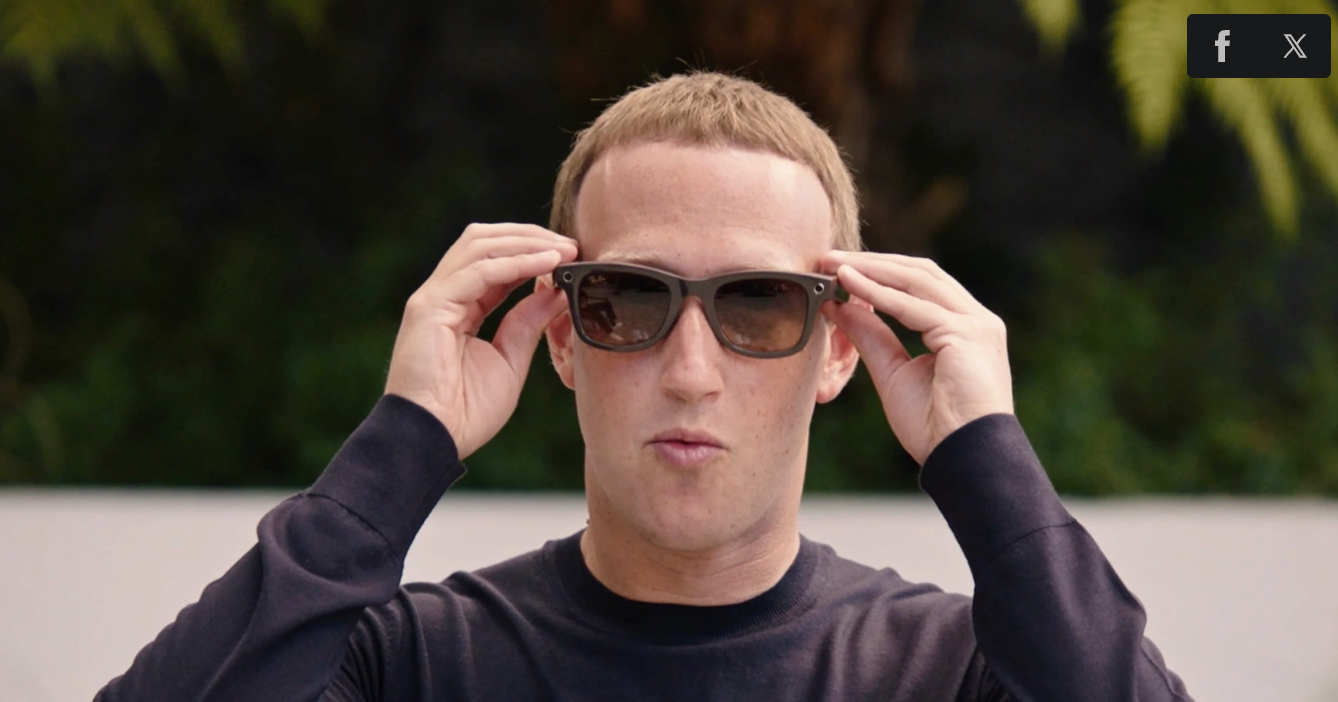
In 2024, Elon Musk received a salary of $0 from Tesla. Jeff Bezos took home just $81,840 in 2021 — low enough to qualify for child tax benefits that year. One of the highest-paid billionaires by salary is Warren Buffett, yet his annual pay and bonus total only $100,000.
All of them minimize tax liabilities by keeping their official salaries extremely low. Instead, they are richly compensated through rising stock values. In 2024 alone, Bezos’ net worth increased by $80 billion, Mark Zuckerberg gained $113 billion, and Musk added $213 billion. Crucially, they can enjoy these gains without triggering income taxes or reporting requirements, as long as they do not sell the shares.
Historically, the U.S. tax system functioned as a bulwark against excessive wealth concentration. But over the past four decades, numerous changes have enabled the wealthy to largely avoid taxation on investments and inherited assets, according to Ray Madoff, a law professor at Boston University.
The shift is particularly evident in stock market rules. Before 1982, companies could distribute profits to shareholders mainly through dividends, which were heavily taxed. That year, however, the U.S. Securities and Exchange Commission allowed companies to repurchase their own shares on the open market.
Instead of paying dividends, corporations could now buy back stock, driving up share prices. As a result, shareholders benefit from rising valuations without selling shares — and without paying taxes on unrealized gains.
To cover living expenses, billionaires might be expected to sell stock and incur taxes. But many avoid this by borrowing against their holdings. Wealthy individuals such as Larry Ellison and Musk have secured massive loans using shares as collateral. Borrowing is not taxable and often comes with favorable interest rates.
“In recent years, stock appreciation has far outpaced the interest owed,” Madoff noted. “To pay interest or refinance, they simply borrow more.”
Billionaires can also sharply reduce taxes when transferring wealth to their children. In the United States, estates or gifts exceeding $15 million are theoretically subject to taxes of up to 40%. In practice, however, estate taxes are riddled with provisions designed to protect family businesses, weakening their impact, Madoff said.
“Although the estate tax still exists on paper, Congress has not closed its loopholes in 35 years,” she argued. “The result is a system full of gaps that allow the wealthy to shield assets from taxation.”
As a result, the richest 1% of Americans hold roughly $50 trillion in assets, while estate tax revenue in 2024 amounted to only about $30 billion — a sum Musk could gain or lose in a single day.
According to Madoff, the estate tax now functions largely as “window dressing” for the ultra-wealthy. Its existence creates the impression that billionaires are being taxed, even as they benefit disproportionately from the system.
If the wealthiest Americans pay relatively little, who bears the burden? The answer, she says, is high-income earners — individuals drawing large salaries, often in the hundreds of thousands of dollars annually. This group, which includes hired CEOs, professionals and physicians, can pay up to 50% of their income in combined payroll and income taxes.
Madoff cautioned that public perceptions can be skewed by statistics showing that the top 1% of earners pay as much as 40% of total income taxes. That figure refers to the top 1% by taxable income — primarily wages and bonuses — not necessarily the wealthiest Americans by overall net worth.
